Data Science & AI
Predictive modeling, neural networks, computer vision, classification, simulation, and applied AI.
I transform complex scientific, institutional, and business problems into practical data products, analytical systems, and evidence-based decisions.
My work combines statistical modeling, artificial intelligence, bioinformatics, data engineering, product development, and strategic consulting across biomedical, legal, financial, environmental, and institutional applications.
My trajectory has followed a consistent pattern: understand complex systems, translate them into measurable variables, and build practical solutions that improve decisions and processes.
I am a Data Scientist and Computational Oncology researcher with a multidisciplinary background in biotechnology, statistical modeling, data engineering, and analytical product development.
Throughout my career, I have consistently worked at the intersection of quantitative reasoning and real-world problem solving. From experimental biotechnology and industrial process modeling to business intelligence, bioinformatics, legal analytics, financial simulation, and AI-driven products, my focus has remained the same: translating complex systems into structured data, reliable models, and practical decisions.
My scientific background gives me a strong foundation in hypothesis-driven research, statistical validation, biological interpretation, and reproducibility. My industry and entrepreneurial experience complements this with product thinking, database architecture, automation, stakeholder communication, and end-to-end delivery.
Today, as co-founder and Head of AI and Data Science at Neuraxis and as a postdoctoral researcher at the Pelé Pequeno Príncipe Research Institute, I lead and develop analytical solutions for institutional, corporate, and biomedical applications, while continuing research in rare and pediatric tumors.
Four complementary dimensions structure my work.
Predictive modeling, neural networks, computer vision, classification, simulation, and applied AI.
Transcriptomics, regulatory networks, clinical genomics, immune profiling, survival analysis, and precision oncology.
Relational databases, ETL, APIs, automation, dashboards, analytical platforms, and reproducible workflows.
Financial simulation, institutional studies, business intelligence, public finance, and consulting.
Selected recognition for scientific contribution, academic performance, and commitment to research.
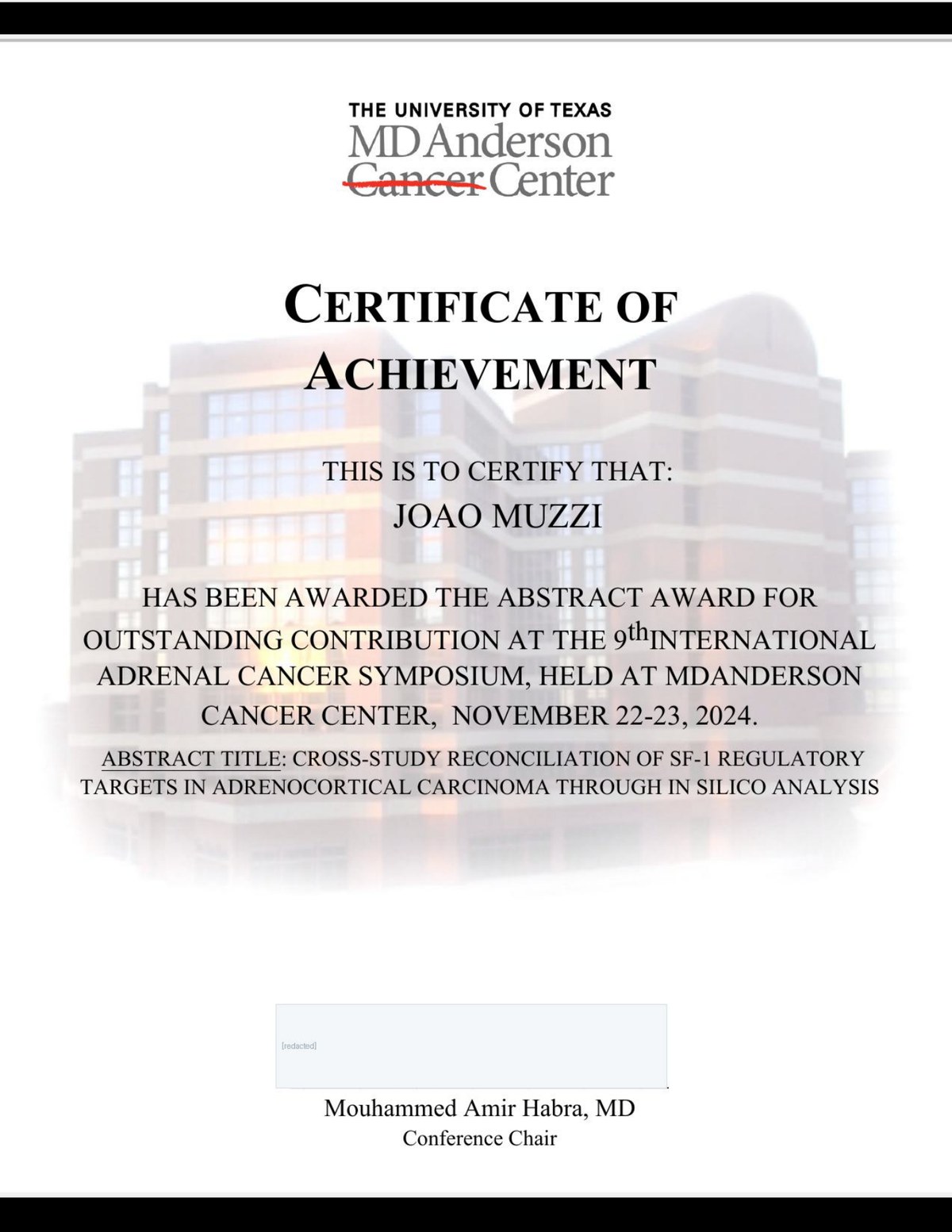
Abstract award for outstanding contribution at the 9th International Adrenal Cancer Symposium.
MD Anderson Cancer CenterAwarded in recognition of the scientific production resulting from my doctoral research in immune-oncogenomics and adrenocortical carcinoma.
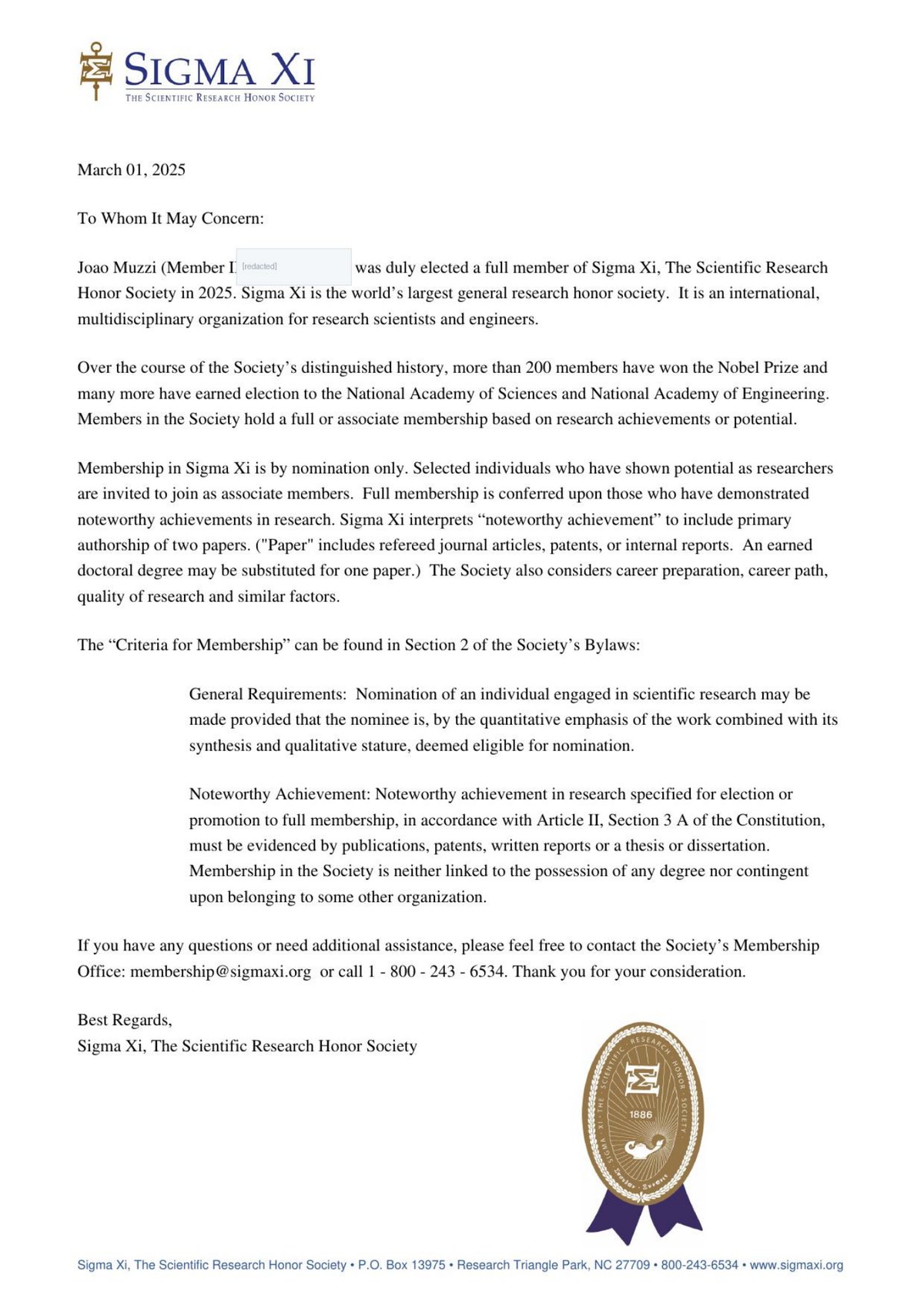
Federal University of Paraná — UFPRElected as a Full Member of The Scientific Research Honor Society, an international and multidisciplinary organization that recognizes contributions to research in science and engineering.
Sigma Xi, The Scientific Research Honor SocietyFormal education, advanced quantitative training, and international academic experience.
Federal University of Paraná, 2022
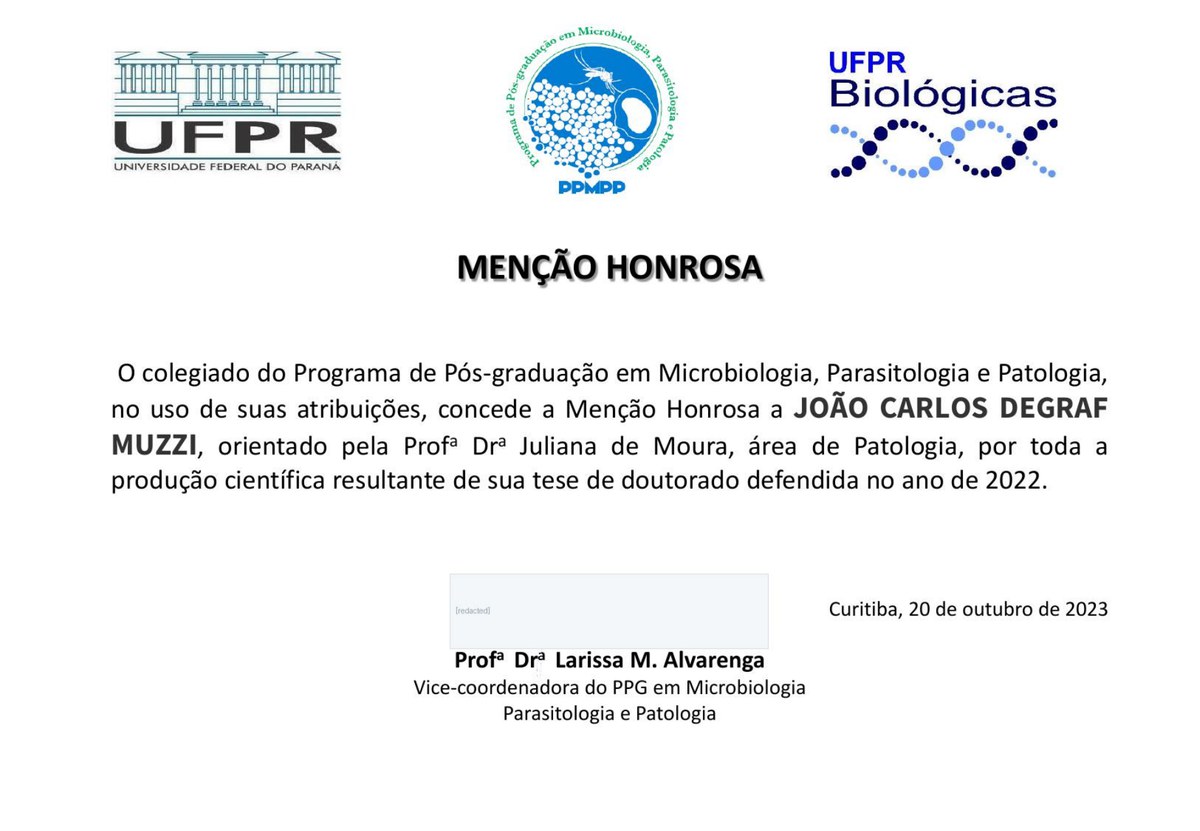
Immune-oncogenomic analysis of adrenocortical carcinoma. Honorable Mention for the scientific production resulting from the thesis.
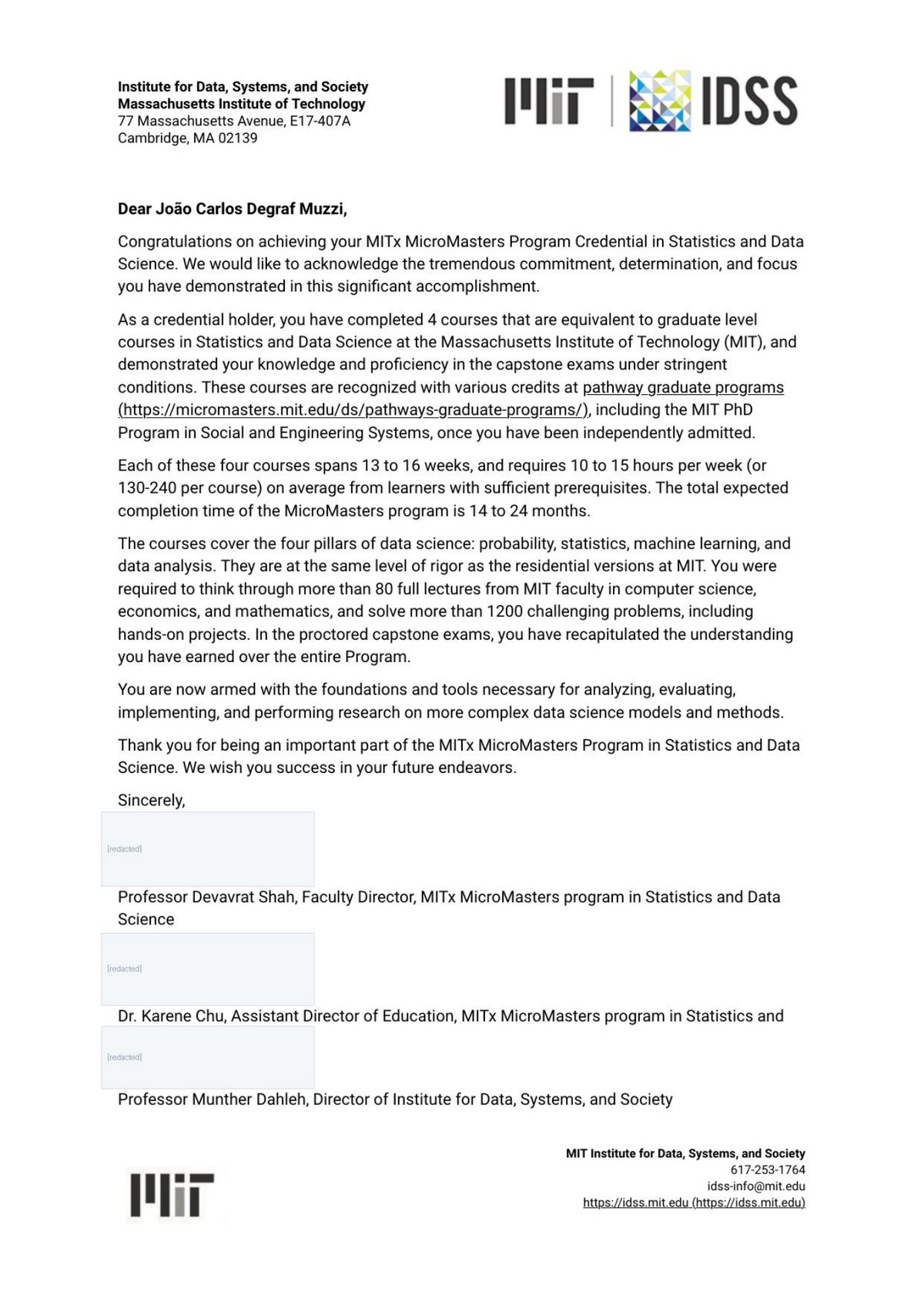
Massachusetts Institute of Technology, 2023
Probability, statistics, computation, and machine learning. Top 25%.
Federal University of Paraná, 2011
Interdisciplinary training in biological processes, engineering, mathematics, and industrial biotechnology. Top 25%.
Aix-Marseille University · UNESCO BIODEV — Master of Science, Mention Microbiology,
Plant Biology and Biotechnologies
Sep 2011 – Dec 2012
Interrupted master’s degree, with all academic credits completed, in the UNESCO Biotechnology for Sustainable Development program. The research project focused on developing a quantitative method for tetanus-toxoid detection in partnership with TECPAR.
The project was interrupted after the planned R&D structure was not implemented and TECPAR’s Bacterial Vaccines Division was discontinued, preventing continuation of the experimental phase.
Representative contributions across institutional decision support, data-product development, operational improvement, and scientific research.
A multidisciplinary trajectory across data science, scientific research, artificial intelligence, data products, institutional analytics, biotechnology, and business operations.
Computational oncology, bioinformatics, and statistical research within the Big Data Project.
I lead and execute integrative analyses of clinical, transcriptomic, and oncogenomic data from rare and pediatric tumors, while collaborating with international research groups and supporting statistical analyses for multidisciplinary biomedical studies.
Conceived and executed an integrative strategy to reconcile three independent SF-1 perturbation studies that had reported highly divergent target-gene sets. I developed the threshold-optimization approach, introduced a methodological adjustment for a specific analytical limitation, performed the full analysis and interpretation, and led the manuscript writing.
The study used the NR5A1 regulon inferred in my 2022 regulatory-network work as an external cross-validation framework and demonstrated convergence at the transcriptional and phenotypic levels despite limited overlap among the originally reported genes.
The work was developed with the Institut de Pharmacologie Moléculaire et Cellulaire in France, received an Abstract Award at the International Adrenal Cancer Symposium at MD Anderson Cancer Center in 2024, and was published in the European Journal of Endocrinology in 2025.
Lead the computational and transcriptional analysis of the functional interaction between SF-1 and β-catenin in adrenocortical carcinoma. The manuscript has been submitted and is currently under review.
Conduct exploratory clinical and molecular analyses of a pediatric ACC cohort. The study remains in progress, and results are not yet publicly disclosed.
Provide statistical design, analysis, interpretation, and visualization for multidisciplinary projects from other research centers, contributing to studies in colorectal cancer, snakebite diagnostics, leprosy, and other biomedical areas.
Conducted clinical and oncogenomic analyses, reconstructed regulatory networks, and investigated how molecular and steroidogenic profiles shape immune activity, prognosis, and potential therapeutic opportunities in adrenocortical carcinoma.
Revisited a previously underused molecular classification and demonstrated that steroid phenotype is central to interpreting the immune landscape of ACC. Tumors with low steroidogenic activity showed stronger immune infiltration and activation markers, while highly steroidogenic tumors displayed a more immunosuppressive environment.
The work proposed steroid-phenotype stratification as a research framework for selecting patients more likely to benefit from immunotherapy and suggested that intratumoral steroidogenesis may need to be inhibited before immunotherapeutic approaches are considered in highly steroidogenic tumors.
It also identified a highly expressed immunotherapeutic target through pan-cancer comparison. Subsequent independent research supported the distinction between circulating cortisol levels and the intratumoral steroid environment, consistent with the biological hypothesis raised in the study.
Reconstructed a transcriptional regulatory network for adrenocortical carcinoma and identified 369 regulons associated with overall survival. The analysis highlighted CENPA as a major proliferation-related regulator, ZBTB4 as a potential anti-tumorigenic and druggable regulator, and NR5A1/SF-1 as a central axis in ACC biology.
The NR5A1 regulon inferred in this study became a reusable analytical resource for subsequent work, including the 2025 cross-study reconciliation analysis and the ongoing SF-1/β-catenin investigation.
Contributed equally to an interdisciplinary study that identified immune-related long non-coding RNA signatures across breast-cancer molecular subtypes. The work expanded my research beyond adrenal tumors and has received more than 40 citations since publication in 2021.
AI products, analytical systems, legal data, and strategic consulting.
I independently design, build, validate, deploy, and support AI-driven products and analytical systems for institutional and corporate applications, combining product ownership, technical execution, data engineering, and strategic consulting.
Transformed an early prototype into a production-ready MVP for monitoring structural changes in protected and public buildings through satellite imagery. I redesigned the architecture, improved and trained the model, built the interface, and deployed the complete solution.
Built a production legal analytics platform used by the Brazilian Bar Association — Paraná Section. The system automated the collection and organization of public procedural information, used AI-assisted document-access workflows, structured the relational database, and implemented the logic required for investigation, classification, monitoring, and operational use.
The platform processed more than one million judicial records and supported the investigation and classification of hundreds of thousands of proceedings involving tens of thousands of attorneys.
Developed simulation and impact-assessment models related to RPV thresholds, court-ordered debt, state revenue, and other institutional financial questions, supporting technical interpretation, negotiation, and strategic decision-making.
Provide technical consulting to OAB-PR on the implementation of VCOM and the stabilization and integration of TOTVS Protheus workflows.
Bioinformatics, genetic-risk modeling, and automated reporting.
Developed a reproducible AI-assisted genetic-analysis workflow for variant interpretation, disease-risk modeling, and individualized clinical-support reporting.
Designed and implemented a workflow that processed VCF files, selected and annotated clinically relevant variants, interpreted disease-associated evidence, and generated individualized reports. Built a literature-based genetic-risk framework using curated variants and published evidence. Developed a neural-network model after selecting the most informative variants for risk classification. The workflow is progressing toward experimental validation.
Advanced analytics, institutional consulting, due diligence, and data-product development.
Led end-to-end development of data products and analytical studies, from problem definition and architecture to modeling, validation, delivery, and communication with company partners and institutional clients.
Developed a SARIMAX monthly time-series model using historical data from 2010 to 2023. The monthly projections were aggregated into annual estimates and achieved approximately 97% agreement with realized annual revenue in the validation period, outperforming the linear, polynomial, and other regression-based alternatives evaluated.
Led the quantitative modeling of alternative judicial-fee structures in a project involving the Brazilian Bar Association — Paraná Section and Paraná’s justice system. I translated legal and financial proposals into measurable scenarios and developed an interactive simulation comparing percentage rates, minimum charges, and maximum caps.
The analysis supported technical discussions and contributed to the development of a proposal subsequently approved by the Legislative Assembly of Paraná.
Developed a public Shiny simulator requested by OAB-PR to demonstrate how payment limits, debt correction, revenue growth, and new precatório inflows could affect state and municipal debt over time.
Designed and coordinated the company’s internal investigation platform, integrating public information from Brazil’s Federal Revenue Service and PGFN to support analysis of corporate relationships, tax liabilities, economic groups, and business backgrounds.
The solution processed approximately 66 million public-data records and involved ETL, relational database architecture, entity linkage, validation, automation, and user-facing analytical workflows.
Designed the technical process for extracting, ordering, linking, and interpreting large volumes of financial and corporate data in a complex forensic investigation.
Delivered recurring reports, management-impact studies, financial analyses, business intelligence, and an API for automated extraction from TOTVS Protheus. I also coordinated internal automations and the company intranet with support from two data-science interns.
Environmental data products, database infrastructure, reporting, and product ownership.
Owned the company’s data-product function, including database infrastructure, DevOps-related coordination, reports, indicators, analytical products, and the technical leadership of selected development initiatives.
Delivered an interactive regulatory report within one week to support an independent verifier’s statutory reporting requirements. It analyzed more than 200,000 tons of reverse-logistics credits documented through invoices, including origin, waste type, tonnage, major generators, duplicate records, and potentially invalid invoices.
Developed a dashboard relating unit revenue to used-oil generation, identified three behavioral clusters, and flagged units with unexpectedly low collection volume relative to sales. Historical monitoring and email alerts were followed by an increase of more than 15% in collected oil volume.
Created a daily monitoring system for integrations between the company platform and state environmental systems. It measured success rates by state and delivered failed MTRs, client details, error messages, and logs to technical and support teams.
The workflow replaced delayed client complaints with proactive daily detection. Integration success improved from approximately 50% in the first week of monitoring to more than 97.5% within a one-week operational window by the time I left the company.
Coordinated one of Brazil’s first automated workflows for validating reverse-logistics credits, including invoice verification, duplicate detection, data consistency, and accountability reporting.
Led a project team of four developers and coordinated the required design activities.
Analyzed a complex relational database containing hundreds of tables and partially documented relationships. Coordinated restructuring and query refactoring across one-to-one, one-to-many, many-to-one, and many-to-many structures.
Produced a technical market and lead analysis used by a client to evaluate whether to pursue an acquisition opportunity related to the privatization of SABESP and to estimate an appropriate investment range.
Analyzed operational, financial, and environmental data and developed the first version of FleetGreen, a telemetry-based greenhouse-gas emissions product.
Independently developed the technical MVP of FleetGreen in approximately four months in collaboration with Mercedes-Benz. I created the API integration with the telemetry platform, defined emissions indicators and analytical logic, processed the data, and built the original dashboards and product functionality.
A redesigned presentation layer was later prepared for FENATRAN 2022 while retaining the core functionality, metrics, indicators, and concepts established in the MVP.
FleetGreen subsequently evolved under Mercedes-Benz and received third place in the Green Products category at the 2024 Daimler Truck Green Mover Award.
Administrative leadership, process digitalization, pricing, and business analytics.
Led administrative and financial operations in one of Curitiba’s larger glass-service companies, supervising up to ten employees and transforming manual processes into structured, reproducible, and data-supported workflows.
Worked across operational, commercial, administrative, and financial activities, developing a practical understanding of the business before leading its process digitalization and analytical restructuring.
Replaced paper-based quotations with a standardized spreadsheet system connected to price tables. Users entered measurements and component codes, and the model calculated dimensions, materials, service values, and the final client-facing layout automatically.
The system substantially accelerated preparation and revision of up to approximately 200 monthly quotations, reduced manual errors, and made updates nearly immediate after supplier price changes.
Developed pricing formulas combining direct material costs with labor, infrastructure, and variable expenses, as well as freight-pricing models based on distance, load, and operating cost.
Conducted ABC analyses of expenses and clients and identified a significant concentration of revenue among large construction companies. The analysis highlighted a strategic vulnerability that became increasingly relevant during the subsequent downturn in the construction sector.
Helped create new revenue streams, including aluminum fabrication and frameless glass systems. Aluminum fabrication became particularly important to sustaining the company during its later years.
Bacterial-vaccine processes, environmental monitoring, and research development.
Worked in a scholarship-funded research placement associated with the UNESCO BIODEV master’s project, supporting environmental-control analysis in the vaccine-production plant and developing a quantitative research proposal for tetanus toxoid.
Investigated a long-standing environmental-control problem that had remained unresolved for several years. I inspected physical sensors, mapped sensor-to-software relationships, recovered previously unused historical reports, and identified limitations in the original installation.
Because the system could not fully automate simultaneous control of humidity, temperature, and differential pressure, I developed a structured manual adjustment process. This restored partial operational stability and kept key variables within required production ranges despite infrastructure limitations.
Completed the academic credits of the UNESCO BIODEV Master of Science program and developed a project for a quantitative tetanus-toxoid detection method. The planned R&D structure was not implemented, and the Bacterial Vaccines Division was later discontinued, preventing completion of the experimental phase.
Industrial fermentation, process automation, energy allocation, and mathematical modeling.
Applied mathematical modeling to industrial fermentation and plant-wide electricity allocation, connecting biological production variables with process automation, cost analysis, and operational decision-making.
Modeled aeration and nutrient-dosage parameters, implemented new set points, and monitored production data to confirm that the automated process behaved as expected under real operating conditions.
Developed a model combining direct equipment measurements with operating time, installed power, indirect indicators, and product-level production variables to estimate missing energy consumption and allocate electricity costs across products.
The model predicted the following month’s total electricity bill with 99.5% agreement and was subsequently used to support bill-of-material calculations, production-cost comparisons among international plants, and evaluation of Brazilian energy costs in manufacturing decisions.
Experimental biotechnology, immunodiagnostics, laboratory standardization, and scientific training.
Conducted experimental research in immunodiagnostics, recombinant proteins, serological assays, cell culture, parasitology, and phage display, while helping establish the laboratory’s early procedures and training routines.
Joined as the laboratory’s first undergraduate student and, under faculty supervision, helped standardize procedures, document routines, and train approximately ten incoming undergraduate and graduate students in methods they had not previously used.
Worked on the development of a diagnostic approach to distinguish neurocysticercosis from toxoplasmosis using immunochemical and serological methods.
Contributed experimental ELISA work to a phage-display project involving bovine sera, which later resulted in a peer-reviewed publication on peptide-based detection of Taenia saginata infection.
My scientific work focuses on the integration of molecular and clinical data to investigate tumor biology, immune heterogeneity, prognosis, and therapeutic opportunities.
Full Member of Sigma Xi, The Scientific Research Honor Society, since 2025.
Member of ENSAT — the European Network for the Study of Adrenal Tumors — since 2025.
Postdoctoral researcher at the Pelé Pequeno Príncipe Research Institute, with international collaboration involving the Institut de Pharmacologie Moléculaire et Cellulaire in France.
Representative work in computational oncology, immunology, genetics, biotechnology, and diagnostics.
European Journal of Endocrinology, 2025
First-author study integrating regulatory-network analysis, transcriptomic data, and experimental evidence.
Cancers, 2022
First-author study identifying transcription factors and prognostic regulatory targets.
Frontiers in Endocrinology, 2021
First-author pan-cancer analysis connecting steroid phenotypes, immune profiles, and therapeutic opportunities.
Cancers, 2026
Study of immune heterogeneity associated with steroid phenotypes in adrenocortical carcinoma.
Cancer Epidemiology, Biomarkers & Prevention, 2026
Population-genetics research on a clinically relevant Brazilian founder variant.
Frontiers in Oncology, 2021
Integrative analysis of immune-related non-coding RNAs across breast-cancer molecular subtypes.
Recommended expandable subsections:
I contribute to student and researcher development across medicine, computer science, bioinformatics, machine learning, transcriptomics, and computational oncology.
Doctoral co-supervision in Bioinformatics
Ongoing interdisciplinary project involving bioinformatics and computational data analysis.
Undergraduate co-supervision in Computer Science
Machine-learning applications to transcriptomic and biological data.
Undergraduate research supervision in Medicine
Analysis of melanocortin 2 receptor expression in adrenocortical carcinoma.
A concise overview; detailed technologies can be associated with each project and role.
R, Python, SQL, MySQL, R Markdown, Bioconductor, Dash, REST APIs, Git, Docker, Airflow, Spark, Linux.
Regression, neural networks, time series, survival analysis, clustering, dimensionality reduction, simulation, computer vision, NLP.
RNA-seq, microarrays, transcriptomics, regulatory networks, gene-set enrichment, VCF processing, variant interpretation, cancer genomics.
Family, martial arts, music, and reading are important parts of my identity.
I earned my black belt in 2009 and taught children and adults between 2011 and 2018. In 2026, I was selected to represent Paraná in traditional karate competitions at regional and national levels.
Music is an important part of my life. My interests range from classical music to rock and hip-hop, and I particularly enjoy playing classical repertoire on the piano.
I enjoy historical fiction, philosophy, theology, and books about culture, human behavior, and history. Although fantasy is not usually my main genre, J. R. R. Tolkien remains my favorite author.
I am open to professional conversations involving data science, artificial intelligence, bioinformatics, computational oncology, analytical product development, scientific collaboration, and strategic data consulting.
I am particularly interested in projects that combine technical complexity, scientific rigor, interdisciplinary thinking, and meaningful practical impact.
Based in Curitiba, Brazil. Available for remote international work, scientific collaboration, selected consulting engagements, and aligned professional opportunities.