Impact

Different domains. Same approach: turning complex questions into measurable evidence and actionable decisions.

My work spans scientific research, public finance, institutional analytics, and applied data science. The examples below highlight cases where quantitative analysis helped resolve uncertainty, generate new hypotheses, reconcile conflicting evidence, or support real-world decisions.

Scientific discovery · Reproducibility

Reconciling the Regulatory Targets of SF-1/NR5A1 in Adrenocortical Carcinoma

Three independent groups performed closely related SF-1 perturbation experiments in the same H295R cell model and obtained apparently divergent target-gene lists. The discrepancy was explicitly discussed in a 2015 review and remained unresolved for more than a decade.

Three studies. One cell model. Less than 10% agreement. A decade later, an integrative analysis showed that the underlying biological responses were substantially more reproducible than the original gene lists suggested.

Our 2025 study reanalyzed the original datasets under a unified analytical framework and used an independently inferred NR5A1 regulon — reconstructed in our 2022 regulatory-network study — as an external reference. The analysis demonstrated convergence across the perturbation phenotypes despite the limited overlap among the originally reported genes.

We developed a threshold-optimization approach to recover consensus gene sets, and showed experimentally that SF-1 dosage and exposure time contribute to heterogeneous target-gene responses. The study also demonstrated negative autoregulation of the endogenous SF-1 transcript.
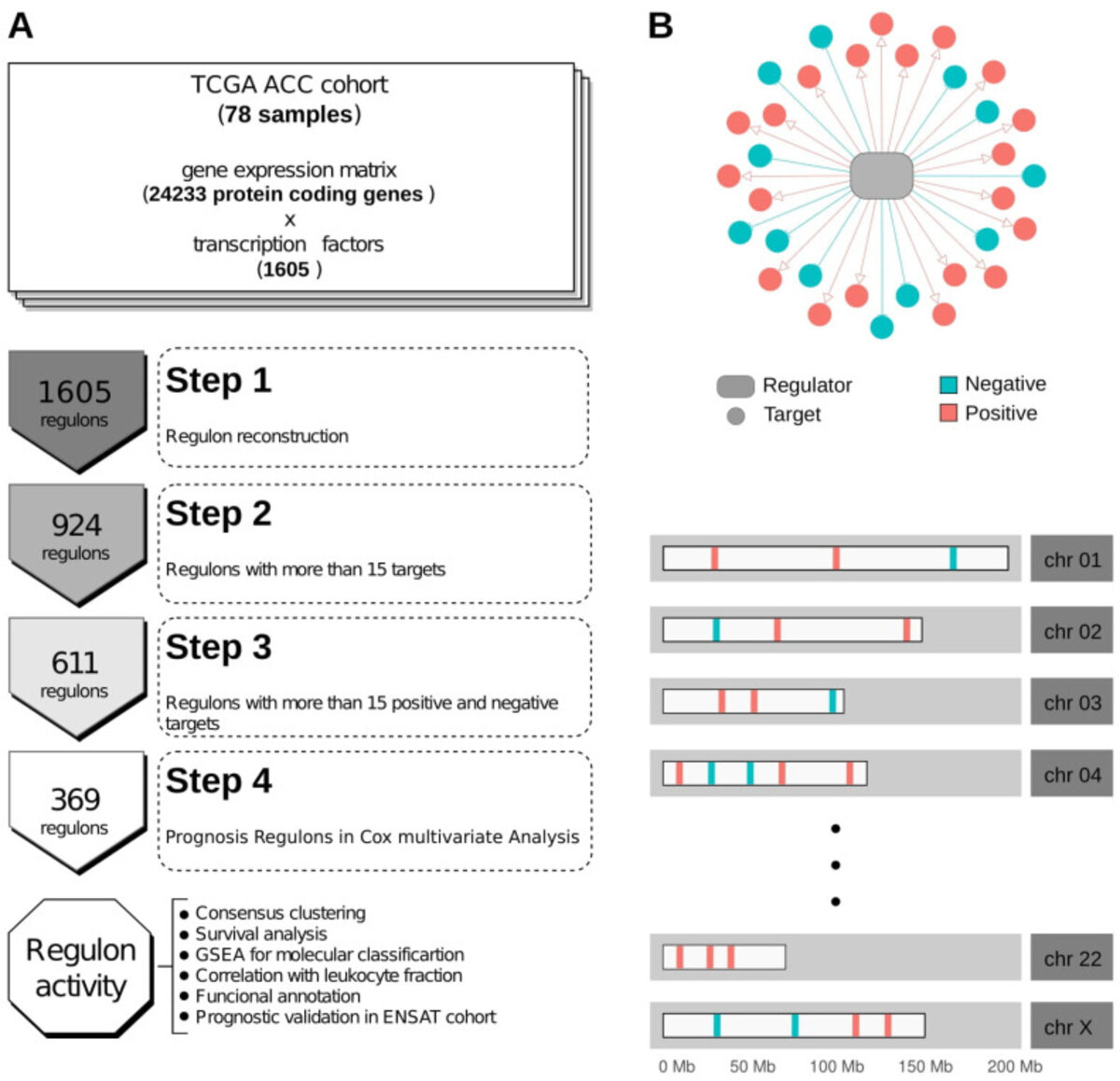
Workflow of the regulatory-network reconstruction in adrenocortical carcinoma: from the TCGA cohort and 1605 transcription factors down to 369 prognosis-associated regulons, with a schematic regulon and its genomic distribution.

Reconstruction of the adrenocortical carcinoma regulatory network that produced the NR5A1 regulon later used as the external reference. Figure 1 of Muzzi et al., Cancers 2022 (CC BY 4.0).

A review explicitly discusses the divergence between the published SF-1 target-gene lists.

Our regulatory-network study infers the NR5A1 regulon later used as an external reference.

Abstract Award for Outstanding Contribution at the 9th International Adrenal Cancer Symposium, MD Anderson Cancer Center.

The reconciliation study is published in the European Journal of Endocrinology.

My contribution: I conceived and executed the integrative strategy, developed the threshold-optimization approach, introduced a methodological adjustment for a specific analytical limitation, performed the full analysis and interpretation, and led the manuscript writing. The work was developed with the Institut de Pharmacologie Moléculaire et Cellulaire in France.

Recognition

Abstract Award for Outstanding Contribution
9th International Adrenal Cancer Symposium
MD Anderson Cancer Center — 2024

Publications & sources

Translational research

B7-H3 as a Therapeutic Target in Adrenocortical Carcinoma

Our 2021 pan-cancer analysis identified B7-H3 as a highly expressed immunotherapeutic target in adrenocortical carcinoma. Independent programs later advanced B7-H3–directed therapy toward the clinic.

From computational evidence to independent translational support.

Working with TCGA data, we compared adrenocortical carcinoma against other tumor types and found B7-H3 among the most highly expressed candidate immunotherapeutic targets, proposing it as a rationale for therapeutic development in a tumor with very limited treatment options.

In the years that followed, B7-H3–directed approaches for adrenocortical carcinoma advanced independently: preclinical CAR-T evidence was presented in 2023 and further evidence in 2024, and a clinical program was registered as NCT04897321.

Scientific caution: the St. Jude clinical program was developed independently and does not cite our work. Our study is presented here as independently identifying and strengthening the therapeutic rationale for B7-H3 — not as a cause of the clinical trial.

Our study

Independent evidence

Scientific hypothesis

The Tumor Steroid Environment Is Not Necessarily Reflected by Clinical Cortisol

A transcriptome-defined steroid phenotype and clinically measured hypercortisolism describe related but distinct aspects of adrenocortical carcinoma — and only the former separated the immune landscape.

Molecular steroidogenesis and systemic hormone excess are related, but not interchangeable, dimensions of tumor biology.

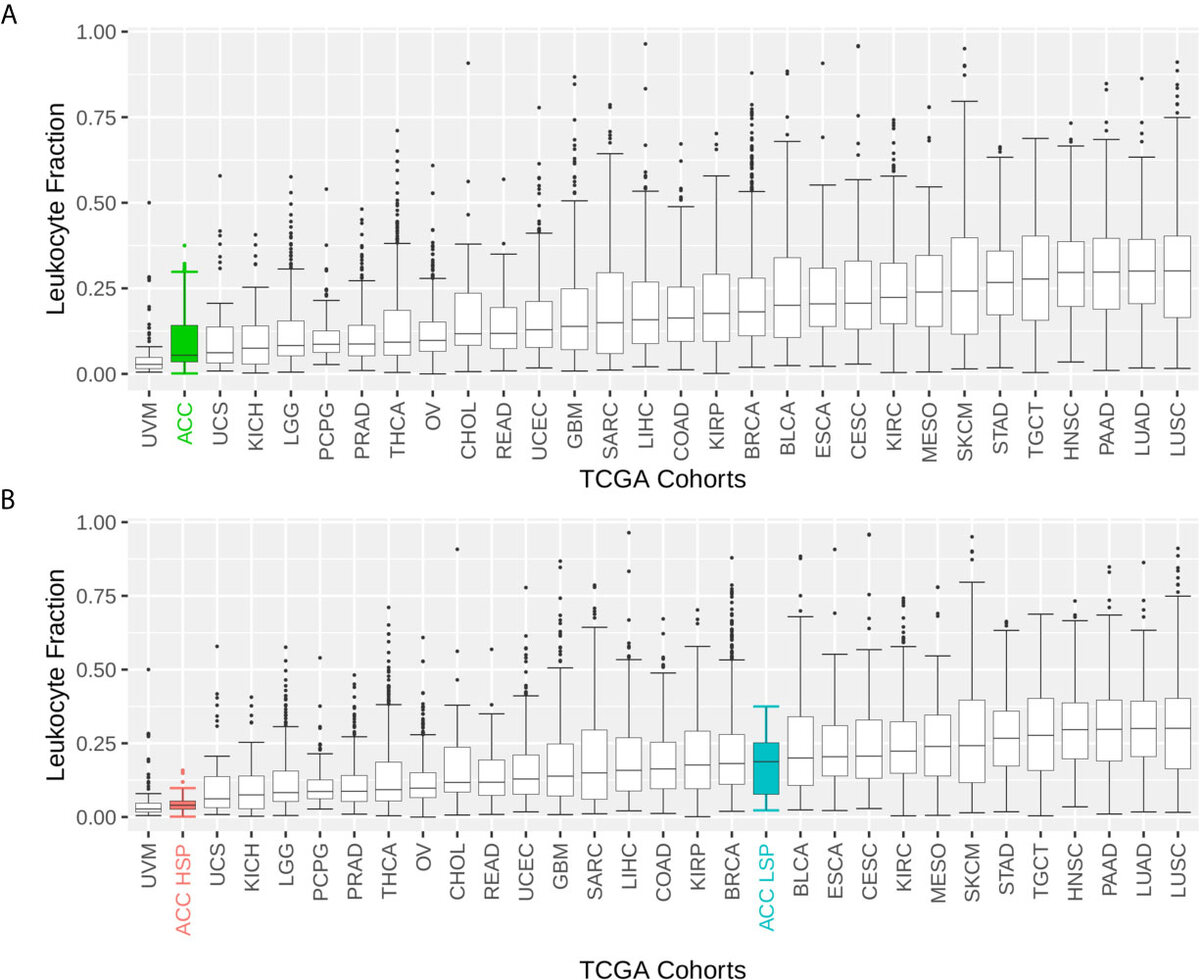
In 2021, our transcriptomic analysis showed that the immune distinction between high- and low-steroid ACC phenotypes was not reproduced when cases were classified solely according to clinical hypercortisolism. Tumors with low steroidogenic activity showed stronger immune infiltration and activation markers, while highly steroidogenic tumors displayed a more immunosuppressive environment.

We proposed that transcriptome-defined activation of steroid biosynthesis could reflect a local hormonal environment in the tumor microenvironment that is not necessarily represented by conventional systemic clinical measurements.

Boxplots of leukocyte fraction across TCGA tumor cohorts: adrenocortical carcinoma as a whole ranks among the least immune-infiltrated tumors, but when split by steroid phenotype the low-steroid group shows markedly higher leukocyte fraction than the high-steroid group.

Adrenocortical carcinoma as a whole ranks among the least immune-infiltrated TCGA cohorts (A), but splitting it by transcriptome-defined steroid phenotype (B) reveals markedly higher immune infiltration in low-steroid tumors. Figure 1 of Muzzi et al., Frontiers in Endocrinology 2021 (CC BY 4.0).

In 2025, Bonnet-Serrano et al. directly measured intra-tumoral steroids and demonstrated substantial discrepancies between tissue steroid content and circulating or clinical measures. In ACC, urinary free cortisol did not significantly correlate with intra-tumoral cortisol, whereas intra-tumoral cortisol correlated with transcriptome-derived adrenal differentiation.

Important note: the 2025 study did not directly validate the HSP/LSP classifier. It independently supported the biological premise underlying our 2021 hypothesis.

Publications & sources

Independent validation

Immune-Related lncRNAs in Breast Cancer

An interdisciplinary computational study identified immune-related long non-coding RNA signatures across breast-cancer molecular subtypes. Several of the highlighted transcripts were later taken up by independent groups.

Several lncRNAs highlighted by our computational analysis were later independently associated with the same immune, prognostic, or tumor-biological patterns.

The 2021 study, to which I contributed equally, related long non-coding RNA expression to immune activity across breast-cancer molecular subtypes and pointed to a set of transcripts worth further investigation.

LINC02613 and EBLN3P were subsequently examined by independent groups, including experimental work on EBLN3P. LINC01871 appears in further supporting studies associating it with immune and prognostic patterns in breast cancer.

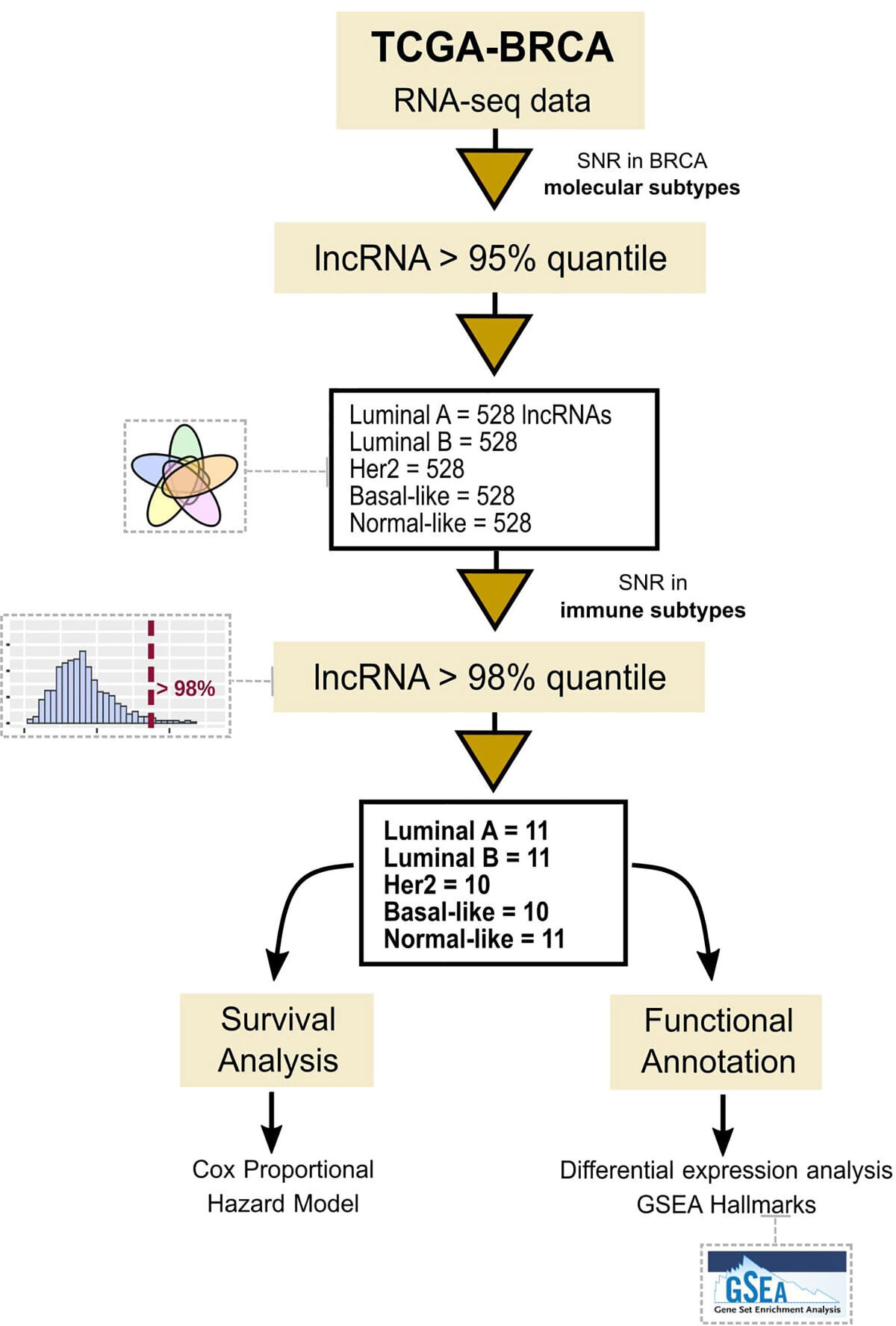
Selection workflow for immune-related lncRNAs in TCGA breast cancer data: from RNA-seq across molecular subtypes, through signal-to-noise ratio filters at the 95th and 98th quantiles, to survival analysis and functional annotation of the final lncRNA sets.

Selection workflow that narrowed TCGA-BRCA lncRNAs down to the immune-related candidates later taken up by independent groups. Figure 1 of Mathias, Muzzi et al., Frontiers in Oncology 2021 (CC BY 4.0).

The study has received more than 40 citations since publication in 2021 — a secondary indicator, not the substance of the impact.

Product origin · Applied data science

FleetGreen: From First MVP to an Award-Winning Emissions Product

As the only technical member of a joint GreenPlat–Mercedes-Benz team, I built the MVP of FleetGreen — a telemetry-based greenhouse-gas emissions monitoring product for truck fleets, shaped together with the product teams on both sides and showcased at FENATRAN 2022, Latin America’s main road-cargo transport fair.

A shared product vision. One technical builder. A working MVP in four months. Two years after my involvement ended, the product earned an international industry award.

Working with product managers from GreenPlat and Mercedes-Benz, who shaped the product vision with me, I was responsible for all of the technical development. In roughly four months I built the complete MVP: the API integration with the Mercedes-Benz telemetry platform, the emissions indicators and analytical logic, the data processing, and the original dashboards and product functionality. For FENATRAN 2022, a designer refreshed the presentation layer while retaining the functionality, metrics, and indicators established in the MVP.

Mercedes-Benz do Brasil announced FleetGreen publicly at FENATRAN 2022, alongside its 2023 truck line, describing it as an integrated solution using FleetBoard telemetry data to measure the carbon emitted during freight transport. Trade press covering the launch credited GreenPlat and Mercedes-Benz jointly, describing the integration between GreenPlat’s PlataformaVerde and Mercedes-Benz’s FleetBoard telemetry.

From 2023 onward, GreenPlat discontinued its participation and Mercedes-Benz continued developing the product independently. Institutional materials since then show an evolved design built on the same core concepts, indicators, and metrics. In 2024, FleetGreen received third place in the Green Products category of the Daimler Truck Green Mover Award.

Transparency note: the 2024 award was granted to the product as continued and evolved by Mercedes-Benz after my involvement ended. I present FleetGreen as a product whose original indicators and MVP I built, within a shared product vision — not as a personal award.

My role

Launch coverage — FENATRAN 2022

Product recognition

Public finance · Institutional analytics

Modeling the Long-Term Impact of Changes to Brazil’s Precatório Payment Rules

Working for Grand Hill in a project developed for OAB-PR, I transformed proposed changes to Brazil’s precatório payment framework into a dynamic quantitative simulation.

A legislative rule may fit into a few paragraphs. Its financial consequences can unfold over decades.

The challenge involved interactions between public revenue, annual payment limits, accumulated debt stock, and the long-term consequences of unpaid balances. I structured the relevant historical and fiscal data, translated regulatory parameters into mathematical rules, built the simulation logic, analyzed alternative scenarios, interpreted the results, and developed an interactive Shiny application.

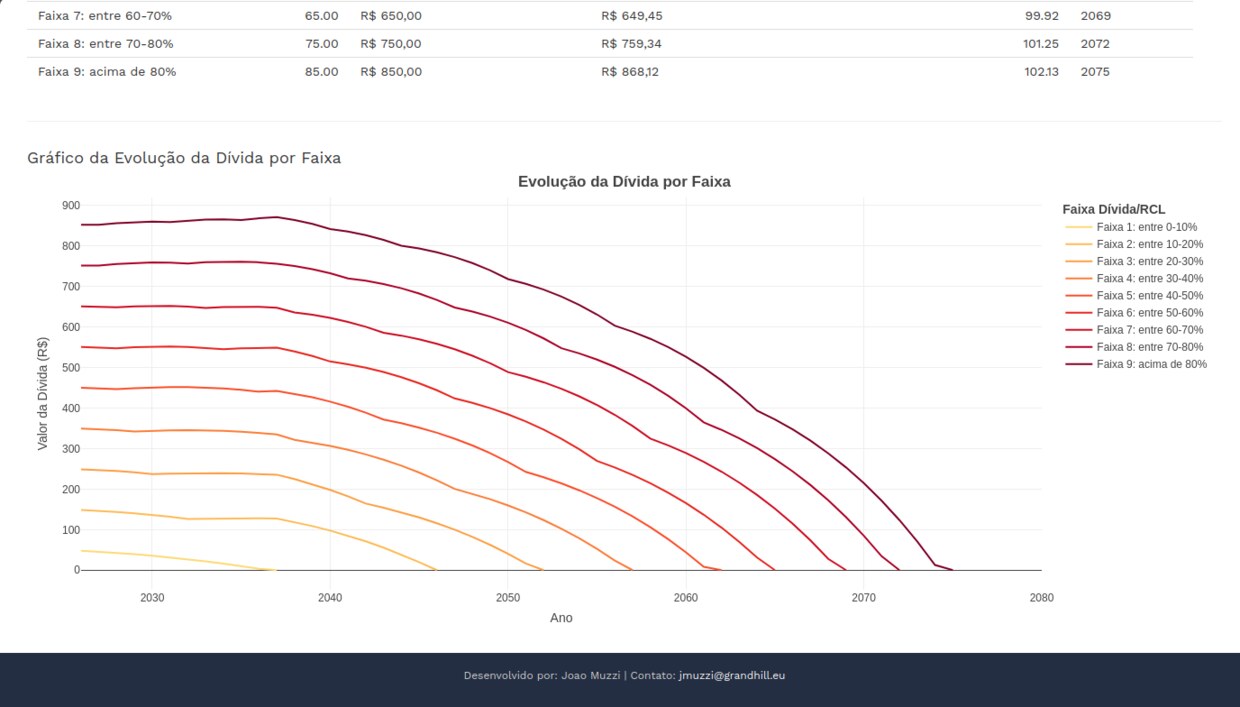
The simulator allows users to modify key assumptions and immediately observe their effect on payment flows, outstanding precatório stock, and the time required to absorb accumulated liabilities. Rather than producing a single estimate, the model transformed a complex legislative proposal into an explorable decision space.

Screenshot of the precatório simulator: a table of debt-to-revenue bands and a line chart projecting debt evolution per band from 2026 to 2080.

Context: the work was performed through Grand Hill for OAB-PR. The model supported technical discussions, provided quantitative evidence, and enabled scenario-based evaluation of the proposal.

Media & public impact

The simulator and its findings received press coverage during the debate over changes to the precatório regime.

The product

At a glance

Representative contributions across institutional decision support, data-product development, operational improvement, and scientific research.

Models & automation Quantitative models with defined, validated performance: a SARIMAX model that forecast annual institutional revenue within 3% of the realized total, and a plant-wide electricity-allocation model that matched the monthly utility bill within 0.5%.
End-to-end Designed and delivered analytical systems for legal analytics, environmental monitoring, genetic interpretation, financial simulation, and satellite-image analysis.
Institutional Transformed complex legal and financial proposals into interactive simulation models that supported high-level technical discussions and evidence-based decision-making.
12 Peer-reviewed publications spanning computational oncology, immunology, genetics, biotechnology, and diagnostics.